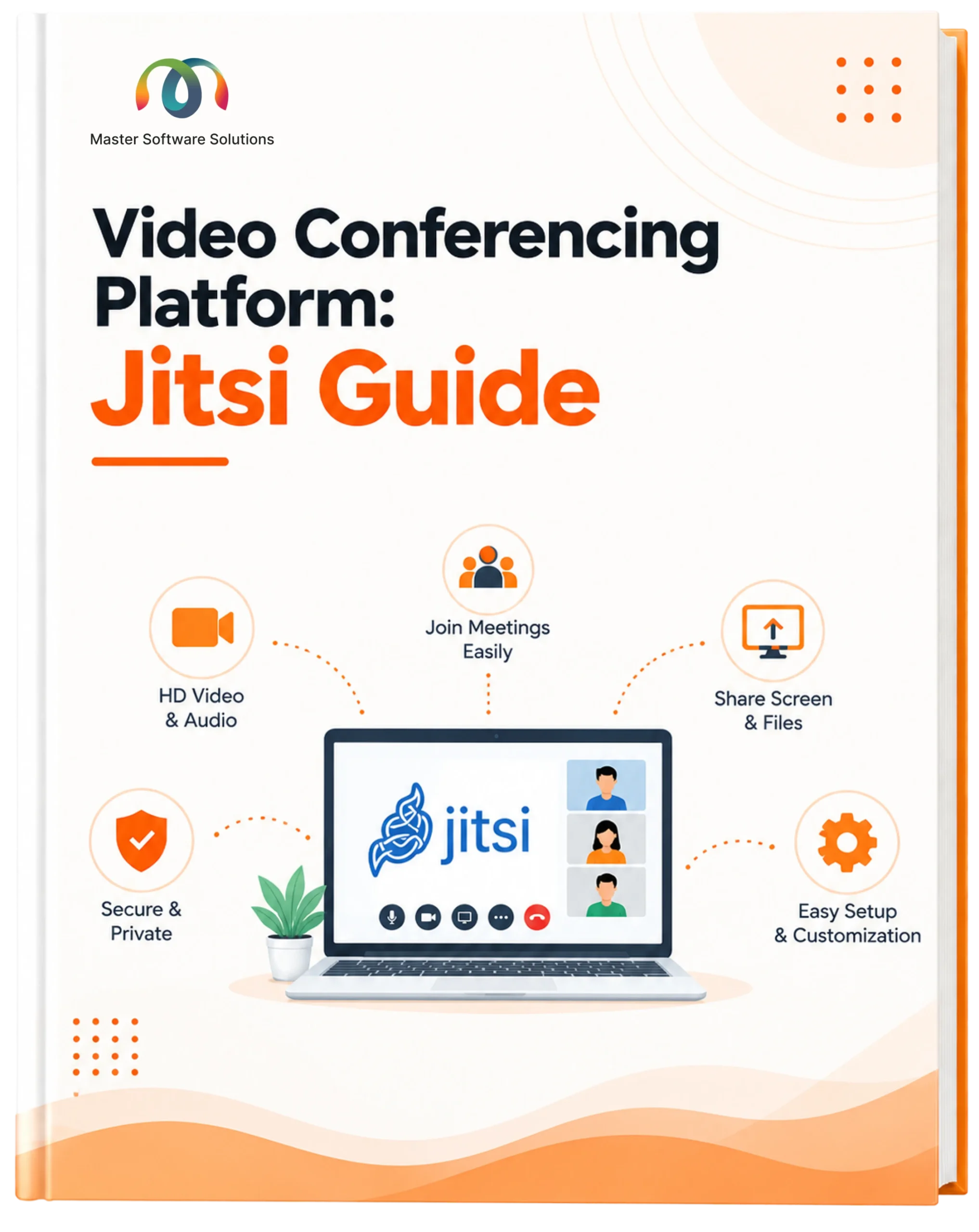
As organizations grow, teams often find themselves switching between different applications for video meetings, screen sharing, messaging, recordings, and webinars. Managing multiple platforms not only increases operational costs but also creates inconsistent user experiences, fragmented workflows, and security concerns.
Businesses today need a communication platform that is secure, flexible, and capable of supporting every collaboration need without adding unnecessary complexity. This is where Jitsi stands out. Jitsi is an advanced, open-source video conferencing platform built on WebRTC, known for its flexibility, security, and ease of use. There’s no software to download; users can join directly from the browser.
What Jitsi Actually Is
Jitsi is an ecosystem of components:
- Jitsi Meet is the app end users interact with.
- Jitsi Videobridge routes video streams between participants to keep latency low.
- Jibri handles recording and streaming.
- Jicofo manages conferences and media sessions.
- Jigasi acts as a SIP gateway for telephone dial-in.
- Ice4j and Libjitsi handle NAT traversal and secure media encoding.
Jitsi was originally launched in 2003 as SIP Communicator; the project moved to WebRTC in 2009 and is now backed by 8×8, a major cloud communications provider.
Where Video Conferencing Platforms Typically Struggle
Video quality is often limited by bandwidth, device capability, and compression artifacts. Scalability is strained by large meetings and peer-to-peer connection limits. Security risks include data interception and unauthorized access (“Zoom bombing”). Latency and user error round out the common pain points.
Key Features That Set Jitsi Apart
- Open-source and free, with full customization
- Advanced video routing for large events
- Cross-platform access
- Adaptive HD audio and video
- Screen sharing and recording
- Meeting management with moderator controls
- End-to-end encryption with password protection
- Lobby mode and deep API integrations
Why Businesses Move to Jitsi
To fix network congestion, scalability, video quality, and security issues, businesses are shifting to Jitsi. It’s cost-effective with no licensing fees, delivers high-quality conferencing that adjusts automatically to network conditions, offers strict security and privacy, and supports flexible integrations and customizations without mandatory registration.
Where Jitsi Is Already Driving Results
- Healthcare (telemedicine consultations)
- Education (virtual classrooms)
- Event planning (branded remote collaboration)
- Fitness (live and group workouts)
- Legal services (confidential client consultations)
Jitsi gives businesses video infrastructure on par with platforms like Zoom, Google Meet, and Microsoft Teams, without the licensing costs or the loss of control. For a complete guide, click here to download.