Enterprise Resource Planning is a building block for many modern businesses. ERP Software plays a significant role in streamlining operations via automation & integrations. Research shows that 97% of businesses report that ERP has transformed their operations. Also, 86% enhanced visibility & reporting to consistent growth & productivity. These numbers show how important ERP is to automate your business operations.
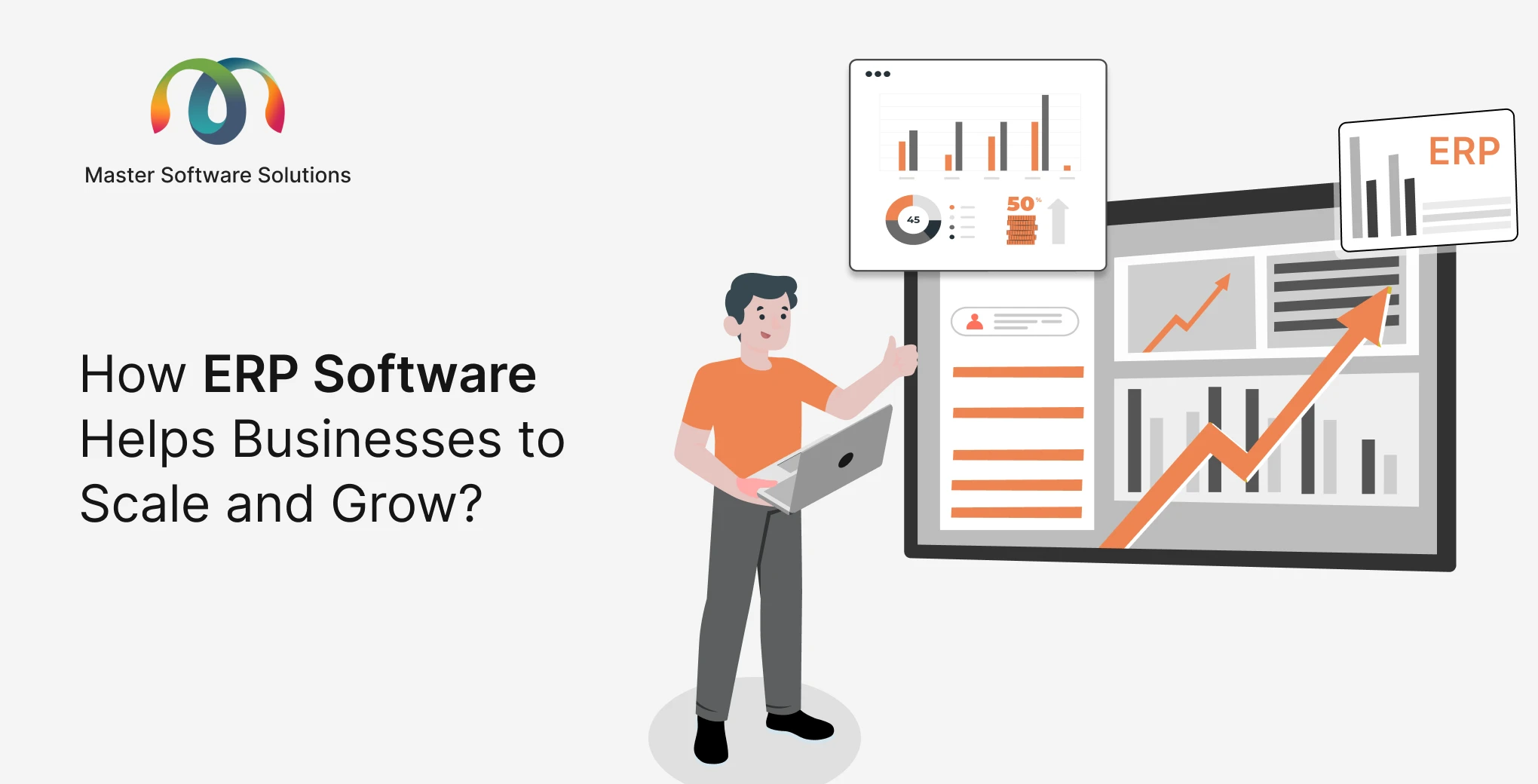
This blog explains how ERP software helps businesses optimize & streamline their business processes & operations.
Significant Ways an ERP system helps businesses improve their operations
An Enterprise Resource Planning (ERP) system is a centralized system that integrates all the applications to track business operations. Its major focus is boosting productivity, streamlining various departments & improving data accuracy. Here are a few ways an ERP system can improve business operations:

Centralized data & real-time insights
ERP software serve as a top-class enterprise-level solution that automates every business process in a unified place. It connects all the departments, like finance, HR, inventory, accounting, and analytics, to provide real-time actionable insights. No manual intervention, only automated processes that enhance the process.
Versatile integrations boost operational productivity & improve decision-making. Here, we will gain insights into how centralized data & real-time insights play a significant role.
- Real-time visibility: The data will be fetched in real time, which helps get timely updates without any unreliable issues in tracking operations.
- Improved efficiency: When the data is not well aligned and includes lots of manual errors, the efficiency will decline. With improved efficiency, you can manage routine tasks to get value-driven results.
- Enhanced collaboration: For proper coordination, the team should be connected in real time across various departments to fetch the data and maintain streamlined communication to meet the final results.
- Agility and compliance: All the real-time data should have specific records to avoid uncertainties. It has been found that real-time data directly impacts business consequences & helps in maintaining audit trails.
Operational automation
The ERP software automates operations by integrating data from all departments into a single database. Here are the key areas that ERP automates.
- Inventory management: In & out data plays a pivotal role in tracking the record of the inventory. This automatic approach helps in monitoring automatic purchasing, eliminating overstocking as well as understocking.
- Finance and accounting: Manually managing the financial records is time-consuming and leads to exceptional errors. ERP software encompasses invoicing, expense management & reconciliation.
- Order processing and fulfillment: Whenever an order is booked or purchased, ERP systems trigger actions that include order confirmation text, generating shipping labels, and updating inventory.
- Human Resources: It’s complicated to schedule the interview process as well as onboarding or payroll management. ERP systems keep everything aligned from onboarding to payroll.
Supply chain visibility
In the supply chain, the ERP system centralizes data from procurement, inventory, logistics, &
Finance to get real-time visibility. This improves supply chain disruptions, cuts operational costs, and enhances customer service. Here are some of the operations performed.
- Real-time inventory management: The ERP system tracks stock levels in real time & also tracks multi-location and in-transit inventory. This process reduces costs due to storage and product wastage.
- Centralized data source: Consolidates data from suppliers, manufacturing, and logistics, creating a single source to eliminate data silos.
- Process automation: Automates operations, including purchasing, order processing, procurement, and inventory updating, reducing manual data errors.
- Improved supplier & vendor management: Tracks vendor performance, purchase orders, and invoices to create better relationships.
- Enhanced demand forecasting: Using historical data to predict future trends, helping businesses to adjust for demand spikes.
Enhanced collaboration
ERP systems centralize the database, allowing teams to share real-time data, reducing redundant work, and improving cross-functional communication. Here is how collaboration across multiple departments improves operations.
- Centralized data access: There is no need to fetch the data from different mediums. The entire data of the system is accessed on the centralized platform to maintain accuracy & consistent.
- Breaking silos: To eliminate data gaps & miscommunication, an ERP system encourages cross-functional teamwork to fix the communication gaps.
- Improved project management: The entire documentation of the project is important to construct the preplanned strategies that will boost success results & lessen task duplication.
- Streamlined communication: Whether it’s team communication or the managerial side, an efficient ERP system fixes misunderstandings and fosters real-time, transparent data sharing.
Real-time inventory monitoring
The ERP system provides real-time, centralized visibility to reduce human error and optimize inventory control. Key ways in which real-time inventory monitoring improves business operations.
- Real-time tracking & visibility: Instant, accurate data on stock levels and locations using RFID and IoT. This reduces manual errors, eliminates stockouts, and optimizes warehouse space.
- Workflow automation: Replacing manual, error-prone tasks with real-time, technology-driven processes, leading to optimized inventory levels, faster order fulfillment, and increased profitability.
- Optimized stock levels: Streamlines warehouse workflows, minimizes obsolete stock, and accelerates order fulfillment, which boosts profitability and customer satisfaction.
- Enhanced demand planning: Streamlines operations such as procurement and production, increases inventory turnover, and enhances customer service.
Improved supply chain management: Real-time visibility reduces holding costs, minimizes stockouts, and enhances order accuracy.
Maximize your growth potential with our innovation solutions. Book your call to discuss your requirements!
Better production planning
For better production planning, an ERP system plays a significant role. From forecasting, inventory, and resource allocation to budgeting, everything is done in a single platform for less time consumption & reduced errors. Below, we cover the key improvements.
Real-time data & visibility
The manager gets a complete track of the production without any interference. They receive real-time insights from the shop floor, which optimize resource allocation & improve decision-making.
Material Requirement Planning (MRP)
It’s necessary that the right material be showcased at the right time to eliminate delays, holding costs & urgencies. ERP calculates requirements based on the overall demand, Bill of Materials (BOMs), & inventory. This prevents stockouts, reduces rush orders & synchronizes purchasing.
Optimizing scheduling & routing
The ERP system will automatically route to the right location, distance, and schedule according to availability. This will reduce machine idle time, transportation costs & ensure timely deliveries. Optimizing scheduling increases efficiency.
Better resource allocation
There are various resources allocated for production. The ERP system will automatically allocate resources according to the requirement. This will manage time, cost, disruptions & timely disruptions.
Improved forecasting
When there are fewer goods or a shortage, it’s difficult for the team to analyze it manually and record the items without a proper estimation. The ERP system aligns the production schedule to eliminate excess inventory in the warehouse.
Simplified compliance & risk management
An Enterprise Resource Planning (ERP) integrates core business departments, i.e., finance, HR, and supply chain, into a single platform. This will eliminate human errors, boost productivity & offer real-time insights. Below, we discuss the ways:
Automated compliance and reporting
This process can automatically provide data analytics with real-time considerations, reducing operational costs and human errors. This also enables fast risk management & audit preparation and data assignment.
Comprehensive audit trails
ERP provides real-time visibility of when, why, and where to perform the action. This directly impacts data integration, automates compliance, & meets regulations that include GDPR and HIPAA to strengthen security.
Built-in risk mitigation controls
If there are any risks identified in the workflows or regulatory requirements. ERP automatically fetches the risks and takes proactive action to streamline business processes.
Real-time data access and security
Whether it’s inventory, finance, manufacturing, reporting, or CRM data, ERP software automatically generates alerts to automate regulatory reporting that helps businesses to avoid costly penalties & strengthen security protocols.
Proactive risk management
There is no need to identify risks manually; ERP enables businesses to identify risks and take measurable steps in real time for enhanced efficiency. This will promote a healthy compliance culture that protects regulations.
Conclusion
Enterprise Resource Planning (ERP) systems contain a centralized platform to set up all the operations in a single platform. From real-time data visibility, to streamlining processes to profitability, every process is administered within ERP to automate & streamline the processes
Master Software Solutions offers end-to-end ERP implementation services, including consulting, migration, configuration, customization, and ongoing support. We are official partners with Odoo and Microsoft and use their ERP platforms, “Odoo” and “Microsoft Dynamics 365,” respectively, to offer custom enterprise-level solutions. We can help you transform your business landscape with smart AI-powered ERP implementation.
Contact us to discuss your business operations and discover your ERP scope.